
Getting into vintage sports card collecting can feel overwhelming at first. Where do you start? What should you look for? How much should you spend? These are all valid questions that every collector faces when taking those first steps into the hobby.
The best advice? Start with something meaningful to you. That's exactly what I did with my Terry Bradshaw collection run, and it turned into one of my most rewarding collecting experiences.
What Makes a Card "Vintage"
Before diving in, let's clarify what we mean by vintage. In the sports card world, vintage typically refers to cards produced before 1981: the start of what collectors call the "junk wax era." This includes the golden age sets from the 1950s through the 1970s, when card production was more limited and quality varied dramatically.
The pre-junk wax era represents a time when cards were primarily marketed to kids, not investors. This makes them special: they're authentic pieces of sports history with real scarcity built in.
Starting Your First Collection Run
A "collection run" means pursuing every card of a specific player throughout their career. It's one of the most satisfying ways to collect because it gives you clear goals and tells a complete story.
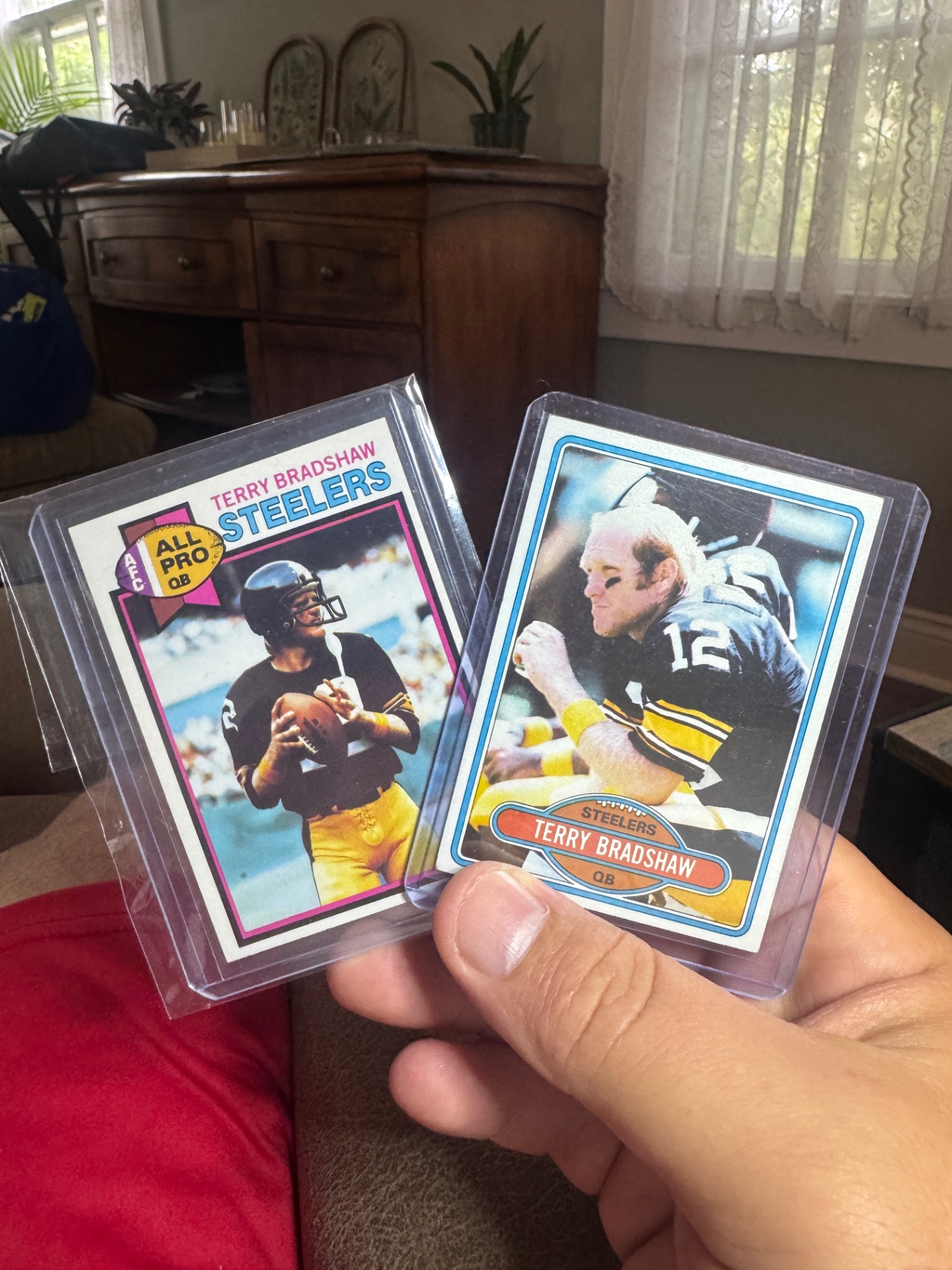
My Bradshaw run started with personal significance: I wanted his 1978 Topps card because that's my birth year. It seemed like a natural starting point, and from there, the collection just grew organically. Each new addition felt like completing another piece of the puzzle.
The beauty of a player run is that it works for any budget. You can start with the more affordable cards and work your way up to the key pieces, or you can begin with a major card and fill in around it. There's no wrong approach.
Choosing Your Player and Era
When selecting a player for your first run, consider these factors:
Personal Connection - Pick someone who means something to you. Maybe it's your favorite player growing up, someone who played for your team, or a player from a meaningful year in your life.
Budget Reality - Mickey Mantle and Willie Mays are incredible players, but their cards command premium prices. Consider Hall of Famers who might be more accessible, like Franco Harris, Johnny Unitas, or Ernie Banks.
Card Availability - Some players have extensive card histories spanning multiple decades, while others might have shorter, more manageable runs. Research what's out there before committing.
Era Appeal - The 1970s offer colorful designs and affordable entry points. The 1960s provide classic aesthetics. The 1950s are the holy grail but require deeper pockets.

Key Cards to Target
Every player run has certain milestone cards that define the collection:
The Rookie Card - This is usually the crown jewel. For my Bradshaw collection, his 1971 Topps rookie was the final piece I needed. I spent months tracking down the right one at the right price.
Championship Years - Cards from seasons when your player won titles or achieved major milestones carry extra significance.
Design Classics - Certain sets are simply more desirable. The 1971 Topps football design is beautiful, while 1975 Topps baseball is iconic for its colorful borders.
Oddball Issues - These include regional sets, test issues, and promotional cards. My collection includes a fun McDonald's Bradshaw card that offered 25 cents off a Big Mac meal.

Understanding Condition and Grading
Condition is everything in vintage collecting. Cards from the 1950s-1970s were produced for kids, so finding them in pristine condition is challenging. Learn the basic grading scale:
- Mint (9-10) - Like it just came from the pack
- Near Mint (7-8) - Slight wear but still sharp
- Excellent (5-6) - Noticeable wear but still attractive
- Very Good (3-4) - Significant wear but complete
- Good (2) - Heavy wear but intact
- Poor (1) - Damaged but recognizable
For most collectors, focusing on cards in the 4-7 range offers the best value. You get authentic vintage pieces without paying premiums for perfection.
The Grading Decision
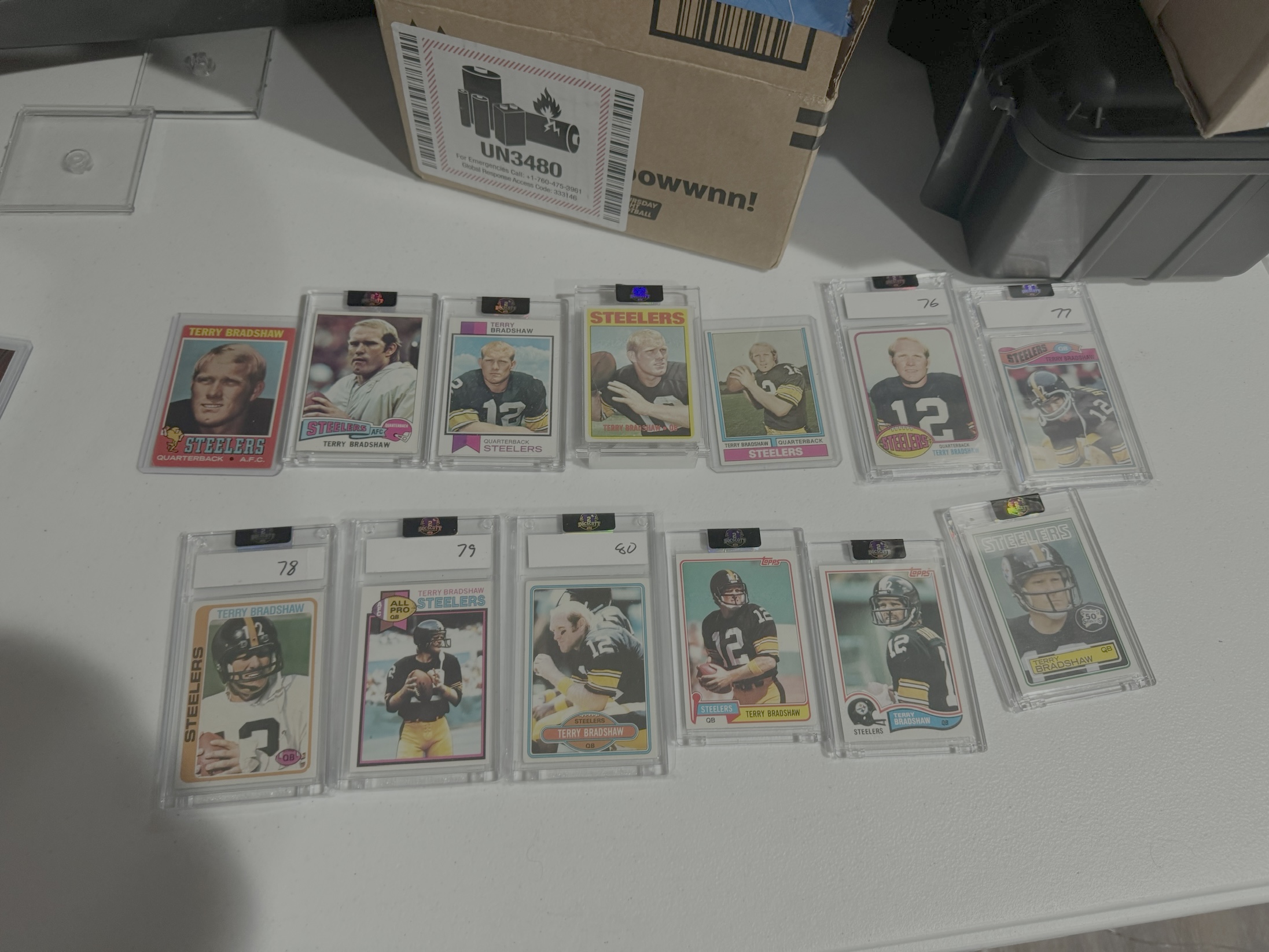
Professional grading services like PSA, BGS, and SGC authenticate and grade cards, sealing them in protective cases. After completing my Bradshaw run last month, I decided to submit the entire collection to SGC for grading.
Grading makes sense when:
- You have valuable cards worth protecting
- Authentication is important (older cards can have condition issues or alterations)
- You want uniform presentation
- You're considering the collection as an investment
Avoiding Common Pitfalls
Reproductions and Reprints - Always buy from reputable sources. If a deal seems too good to be true, it probably is. Familiarize yourself with what authentic cards should look like.
Condition Surprises - When buying online, ask for detailed photos. Seller descriptions can be optimistic, and condition directly impacts value.
Impulse Purchases - Stick to your focus. It's easy to get distracted by other cards, but completing one run is more satisfying than having scattered pieces of many collections.
Overpaying - Research sold prices, not asking prices. Tools like eBay's sold listings help you understand real market values.
Building Your Collection Strategy
Start small and be patient. I didn't complete my Bradshaw run overnight: it took years of watching the market, waiting for the right cards at the right prices. This approach makes the hobby more affordable and more enjoyable.
Set a monthly collecting budget and stick to it. Whether it's $50 or $500, having boundaries helps you make thoughtful decisions rather than emotional ones.
Consider starting with mid-grade examples and upgrading over time. This lets you enjoy the cards while you learn the market and improve your eye for condition.
Storage and Preservation
Protect your investment with proper storage:
- Penny sleeves and toploaders for individual cards
- Storage boxes for larger collections
- Climate control to prevent damage from humidity and temperature swings
- Inventory tracking so you know what you have
Quality storage supplies are worth the investment. Your cards will maintain their condition better, and you'll enjoy them more knowing they're properly protected.
The Reward of Completion
There's something magical about completing a collection run. When I finally added Bradshaw's rookie card to my collection last month, it felt like closing a chapter that began with my birth year card decades ago. Every card in between tells part of his story: and mine.
The collection represents not just Terry Bradshaw's career, but my journey as a collector. Each card has a story about where I found it, what I paid, or why it was significant at the time.
Getting Started Today
Ready to begin your first vintage run? Here's your action plan:
Choose a player who means something to you. Research their card history and typical prices. Set a realistic budget. Start with one affordable card to get the ball rolling.
Remember, vintage collecting isn't about having the most expensive cards: it's about building something meaningful that connects you to sports history. Whether you start with a $10 card or a $100 card doesn't matter. What matters is taking that first step.
The vintage card market rewards patience, research, and passion. Take your time, enjoy the hunt, and build something you'll be proud to display for years to come.
Your collection run starts with a single card. Which one will it be?