

A few weeks back, our buddy Sonny sparked quite the discussion on the DocScott Sports Cards Facebook page with a simple but loaded question: "Can we trust AI to grade our cards as accurately as the human experts we've relied on for decades?" The responses were all over the map: some collectors excited about instant results, others skeptical about letting algorithms determine their card values.
Here's the thing: AI grading isn't just coming to the sports card world: it's already here. And after digging into what's happening behind the scenes, I'm convinced that the major players like PSA and BGS aren't just going to watch from the sidelines. They're going to embrace this technology and make it part of their arsenal.
How AI Grading Actually Works
Let's cut through the tech jargon and break down what's really happening when you scan a card with AI. These systems use computer vision, basically teaching computers to "see" like human graders do, but way faster and more consistently.
The process starts with high-resolution scanning that captures every detail of your card. The AI then analyzes four key areas that human graders focus on: centering (how well the image sits within the borders), corners (any wear or damage), edges (smoothness and sharpness), and surface quality (scratches, print defects, or other issues).
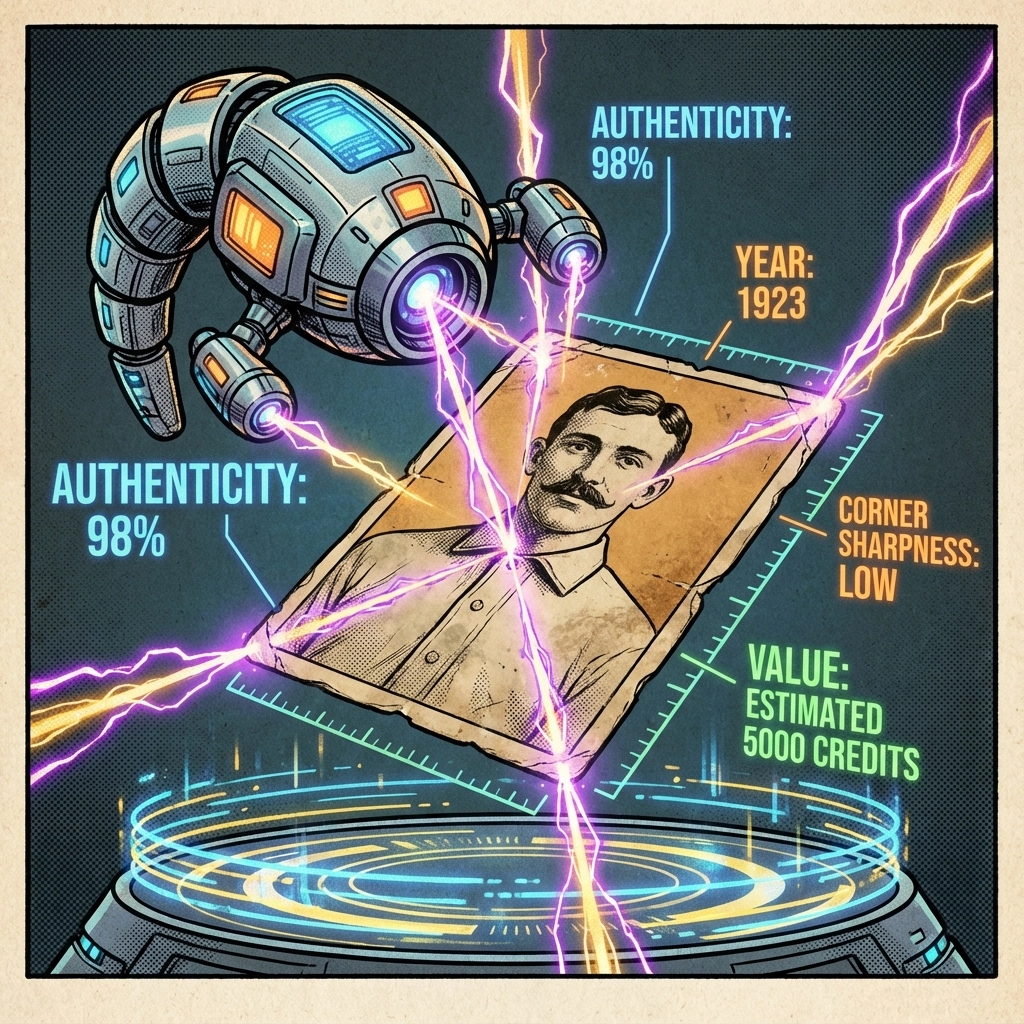
What makes modern AI grading impressive is the training data. PSA's AI scanner, for example, was trained on nearly 40 years of grading data: that's millions of cards and decisions that help the system understand what separates a PSA 9 from a PSA 10. The result? Most cards get analyzed in under three seconds, complete with detailed explanations of what affects the grade.
Companies like BinderAI are hitting 87% accuracy when their grades are compared to actual PSA results. That's not perfect, but it's pretty remarkable for technology that can give you an answer while you're still holding the card.
The Current AI Grading Landscape
The AI grading space is heating up fast. PSA made waves earlier this year by integrating an AI scanner directly into their mobile app. It's not replacing their traditional grading service, but it helps collectors decide whether a card is worth the submission fee and wait time.
Other platforms are going all-in on AI-first approaches. BinderAI offers instant grading across multiple card types: from sports cards to Pokémon and Magic: The Gathering. CardBoss claims their patented system can process cards within hours instead of months. AGS markets their "Robograding" technology as being 10 times faster than human graders while catching microscopic defects that even experienced eyes might miss.
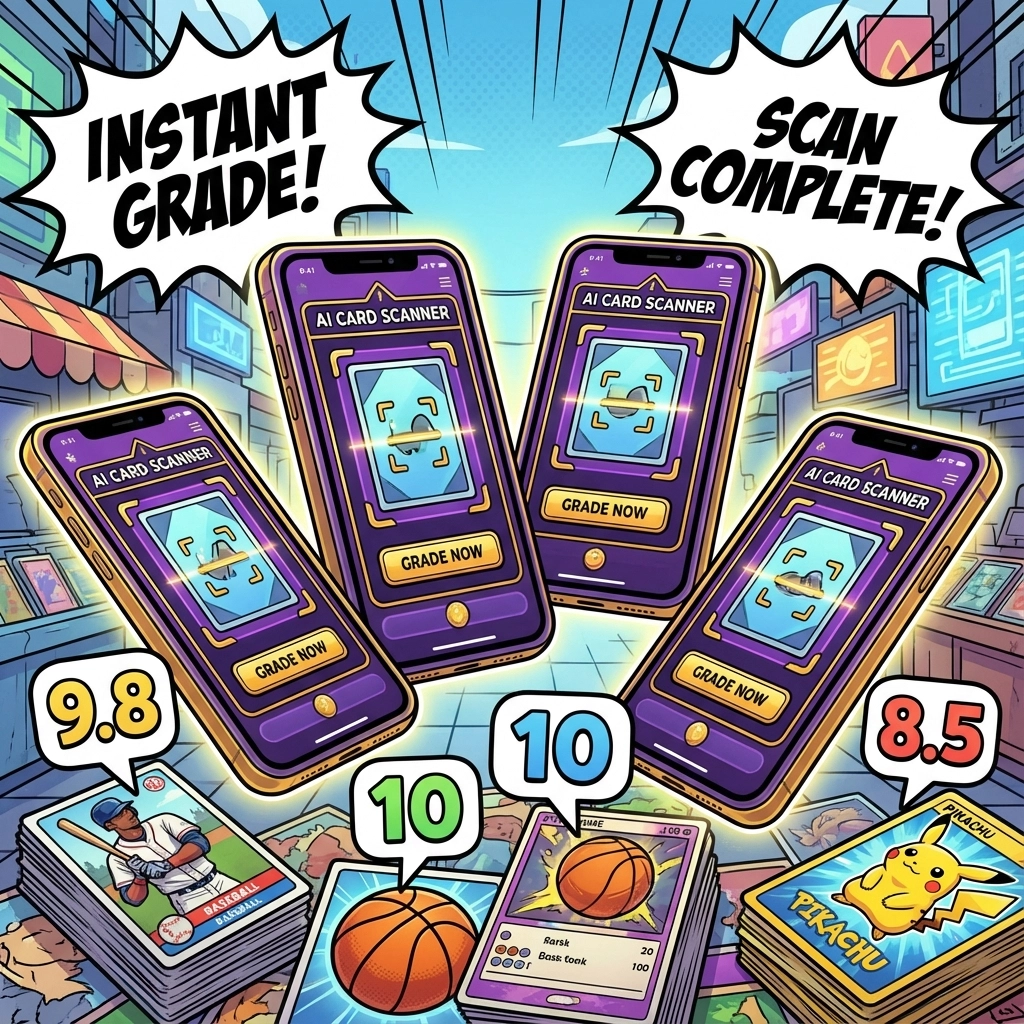
What's interesting is how these platforms position themselves. Most aren't trying to replace PSA or BGS slabs: they're positioning as pre-grading tools. Think of them as a way to sort through your collection and identify which cards are worth the time and expense of official grading.
The Speed vs. Trust Debate
Here's where things get interesting for collectors. AI grading solves some real pain points in our hobby. Remember waiting three months for PSA submissions to come back? Or agonizing over whether that slightly off-center rookie card is worth a $20 grading fee? AI answers those questions instantly.
The consistency factor is huge too. Human graders have good days and bad days, coffee breaks, and personal preferences. AI doesn't. It applies the same standards to every single card, eliminating the subjectivity that can frustrate collectors.
But speed and consistency mean nothing if the market doesn't trust the results. Right now, a PSA 10 slab carries way more weight in the marketplace than an AI grade report. That's not necessarily a knock on AI accuracy: it's about decades of reputation and market acceptance.
Where the Big Boys Come In
This is where I think Sonny's question misses the bigger picture. It's not about AI versus human graders: it's about the major grading companies using AI to enhance their services.
PSA already proved they're thinking this way. They didn't launch AI grading as a competitor to their traditional service: they integrated it as a tool to help collectors make better decisions. Their Chief Technology Officer specifically mentioned building the technology "so that anyone could use it," democratizing access to grading expertise.
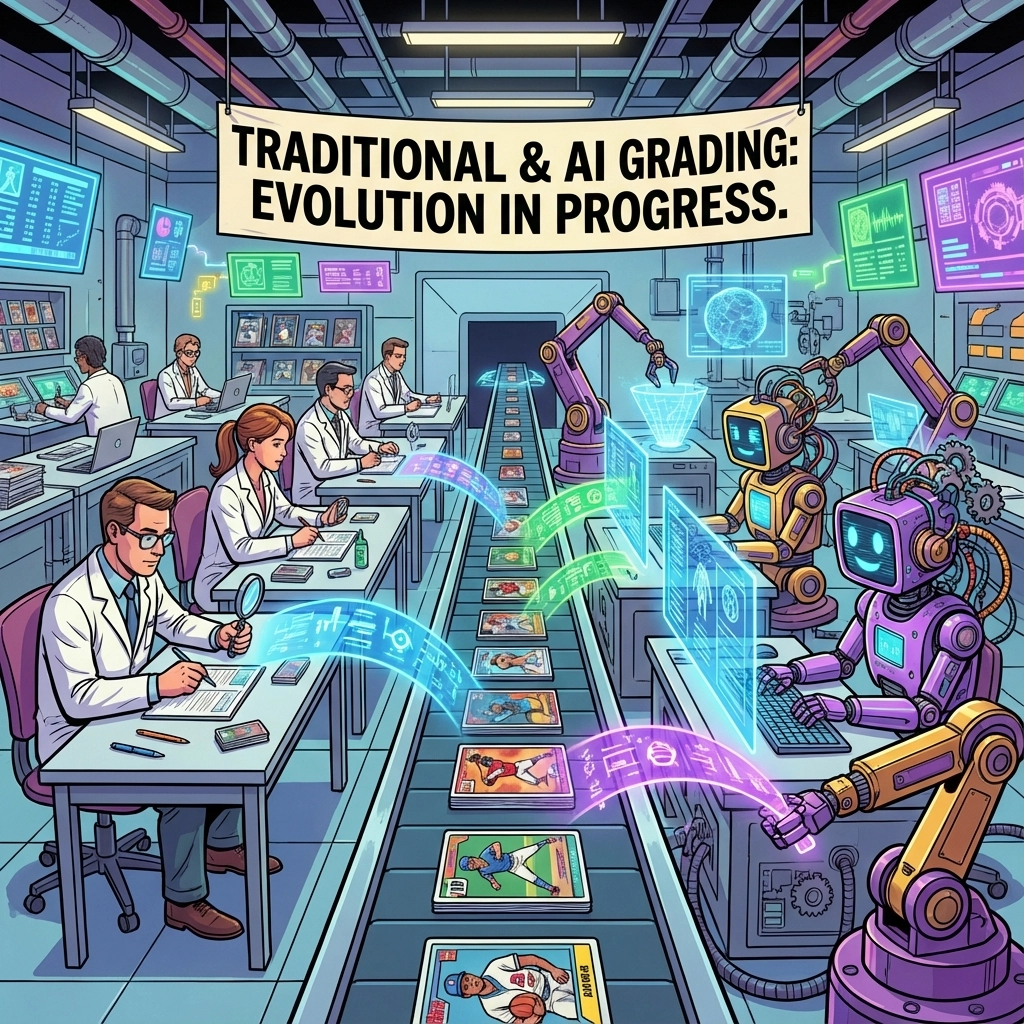
BGS, SGC, and other established players are watching this closely. They've built their reputations on accuracy and consistency, and AI can help them deliver both at scale. Imagine BGS using AI for initial assessment, then having human graders focus on edge cases and high-value cards. Or PSA using AI to catch counterfeits and obvious grades, speeding up the overall process.
The economic incentives are clear. Grading companies can process more cards faster while maintaining quality. Collectors get quicker turnarounds and more confident submissions. It's not about replacing human expertise: it's about amplifying it.
What This Means for Collectors
For the average collector, AI grading is already proving its worth as a decision-making tool. That stack of cards from your latest box break? Run them through an AI scanner before deciding which ones warrant professional grading. That vintage card you're thinking about selling? Get an AI assessment to set realistic expectations.
The technology excels at filtering out obvious non-candidates. If AI grades your card as a 6 or 7, you probably don't need to spend money getting it professionally slabbed unless it has serious sentimental value. If it comes back as a potential 9 or 10, that's when you start thinking about official submission.
We're also seeing AI grading help with collection organization and insurance documentation. Platforms like BinderAI let you build digital collections with grade estimates and market values: useful for tracking your investment or filing insurance claims.
The Road Ahead
Here's my prediction: within the next couple years, you won't be able to separate AI from traditional grading. The major companies will integrate AI so seamlessly that collectors won't even think about it: they'll just notice faster, more accurate service.
PSA is already there with their app integration. I expect BGS and others to follow with their own AI tools, probably starting with pre-submission screening and expanding from there. The companies that figure out the best human-AI partnership will dominate the market.

We might also see new hybrid services emerge. Imagine submitting cards for "AI Express" grading that uses artificial intelligence for initial assessment, with human review for grades above certain thresholds or for high-value cards. Fast, affordable, and backed by human expertise where it matters most.
The DocScott Take
At DocScott Sports Cards, we're watching this evolution with excitement, not concern. AI grading isn't going to kill the hobby: it's going to make it more accessible and enjoyable for collectors at every level.
"AI grading is like robot umpires in Major League Baseball. We know we need it, we just aren't ready to say we need it." Like MLB's shift toward automated strike zones, the hobby will resist, debate, and test, but the pull toward consistency, speed, and less human bias makes the direction feel inevitable, even if the community grumbles at first.
New collectors can learn about card condition and grading standards without expensive mistakes. Experienced collectors can process their collections more efficiently and make smarter submission decisions. And everyone benefits from faster, more consistent grading standards as the technology matures.
The future isn't AI versus human graders: it's AI empowering human graders to do their jobs better. Sonny's question about trusting AI misses the point. We don't need to trust AI instead of human experts. We need to trust the human experts who are smart enough to use AI as a tool.
Whether you're breaking boxes, building sets, or hunting for that next gem, AI grading is going to be part of your collecting journey. Embrace it, learn how to use it effectively, and watch it make the hobby better for everyone involved.
The cards don't lie: and soon, neither will the technology that helps us understand them.