

The vintage card market isn't just about nostalgia: it's about owning pieces of sports history that were produced before mass manufacturing changed everything. If you're thinking about diving into pre-junk wax era cards (roughly 1948-1985), you're entering a world where scarcity actually means something and every card tells a story.
Unlike the junk wax explosion that started in 1986, vintage cards were produced in limited quantities. There weren't cases upon cases sitting in warehouses. When Topps printed Mickey Mantle's 1952 rookie card, they made what they made, and that was it. This fundamental difference is why vintage collecting feels so different from chasing modern parallels.
Understanding the Pre-Junk Wax Timeline
The golden age of vintage runs from the late 1940s through the early 1980s. You've got the post-war boom starting with 1948 Bowman, the Topps monopoly years, and the beautiful designs that defined decades of collecting. Each era has its own personality and collecting challenges.
The 1950s brought us iconic designs and legendary rookies. The 1960s gave us the classic Topps look that many collectors still consider the gold standard. The 1970s introduced us to different sizes, experimental designs, and the last hurrah before overproduction took over.
Key Sets That Define Vintage Collecting
1952 Topps: The holy grail set. Large size, beautiful photography, and that Mantle rookie that sells for millions. Even commons from this set command respect.
1955 Topps: Roberto Clemente's rookie year and arguably one of the most attractive vintage designs ever produced.
1957 Topps: Clean, colorful, and loaded with Hall of Famers. This set captures everything great about 1950s card design.
1971 Topps: The black borders make high-grade examples incredibly difficult to find, but the design is striking and memorable.
1975 Topps: Two-tone borders, rookie cards of future legends, and that classic 1970s aesthetic that screams vintage.
What Makes a Vintage Card Worth Chasing
Rookie Cards Are King: In vintage, rookie cards carry even more weight because there were fewer card companies and fewer opportunities for players to have "first" cards. A player's true rookie card from the 1960s is often their only mainstream rookie card.
Condition Rarity: Finding vintage cards in high grade is genuinely difficult. These cards were printed 40-70 years ago, often on cheaper paper, and most were actually used by kids. A PSA 8 vintage card is often more impressive than a PSA 10 modern card.
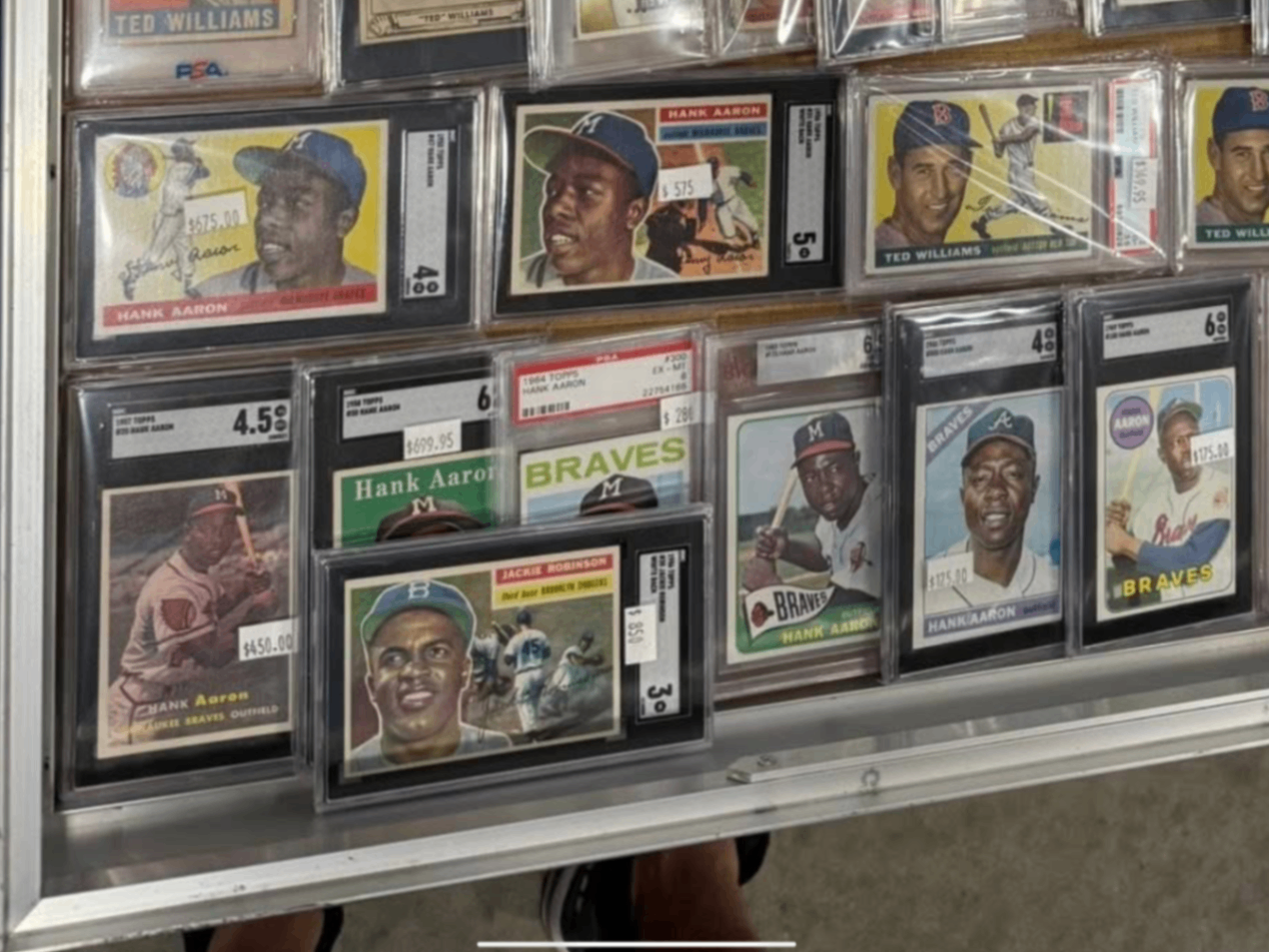
Star Power: Hall of Fame players from vintage sets aren't just collectible: they're irreplaceable pieces of baseball history. Cards of Willie Mays, Hank Aaron, Ted Williams, and Mickey Mantle will always have a market.
Set Completion Challenges: Unlike modern sets with thousands of parallels and variations, vintage sets were designed to be completed. But scarcity and condition issues make completion a real achievement.
Grading Quirks in Vintage Cards
Vintage cards get graded differently than modern cards, and understanding these nuances can save you money and disappointment.
Centering Standards: Vintage cards were hand-cut or cut by primitive machinery. Perfect centering is rare and commands huge premiums. Don't be afraid of slightly off-center cards if everything else looks good.
Surface Issues: Print spots, minor scratches, and paper quality issues that would kill a modern card's grade are more acceptable in vintage. Graders understand the limitations of 1950s printing technology.
Corner Wear: Sharp corners on a 70-year-old card are miraculous. Soft corners that aren't rounded or creased can still grade well if everything else is solid.
Color and Focus: Vintage printing wasn't consistent. Color variations and slight focus issues within the same set are normal and don't necessarily hurt value.
Spotting Fakes and Reprints
The vintage market has its share of counterfeits and reprints, but they're usually pretty obvious once you know what to look for.
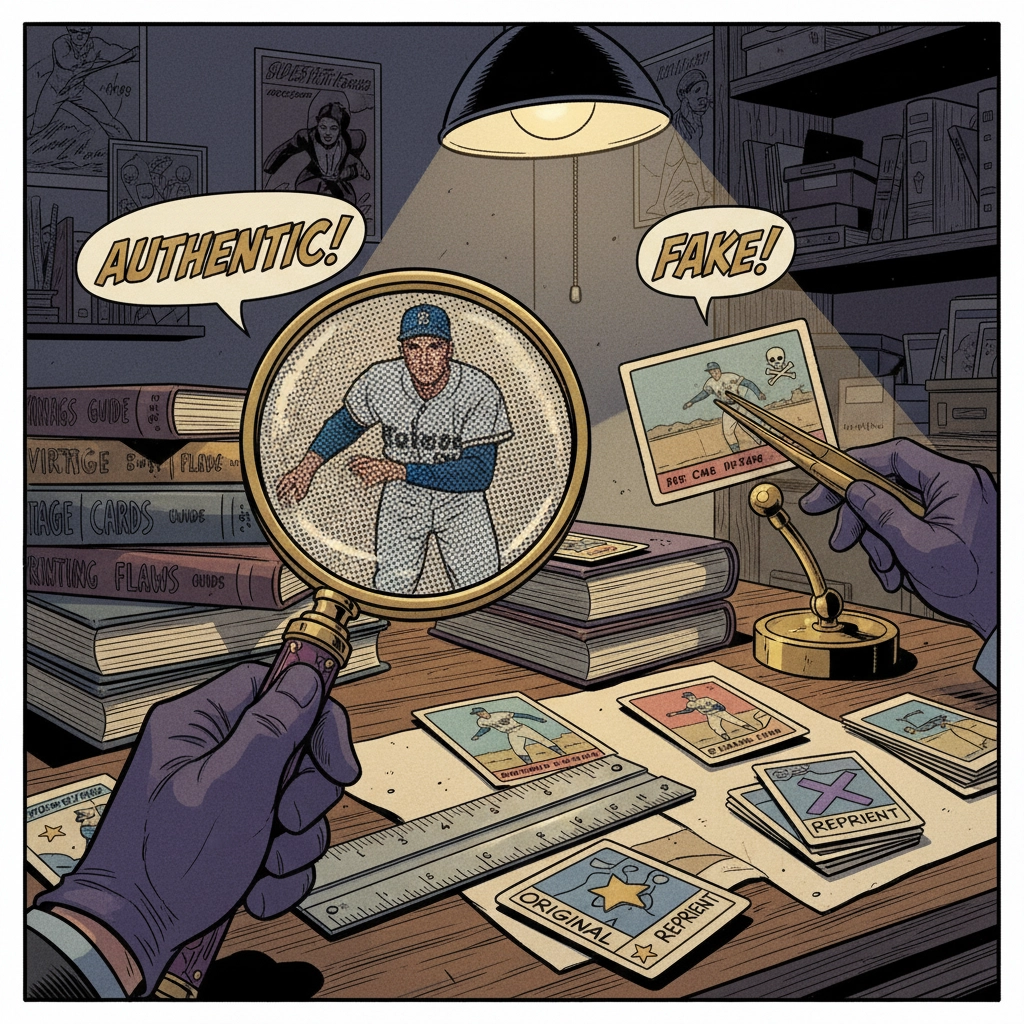
Paper Feel: Original vintage cards have a different paper texture than modern reprints. They feel thinner and often have a slightly rough texture.
Printing Dots: Use a magnifying glass to examine the printing. Original cards use halftone dot patterns that are different from modern digital printing.
Back Design Details: Study the backs of authentic cards. Font sizes, spacing, and color variations are hard for counterfeiters to match perfectly.
Size Variations: Many reprints are slightly different sizes than originals. Measure suspicious cards against known authentic examples.
Too Good to Be True: If a 1952 Mantle looks absolutely perfect and costs $500, it's probably a reprint. Trust your instincts.
Where to Hunt for Vintage Gold
Estate Sales: Older collectors downsizing often have vintage gems tucked away in closets and basements.
Card Shows: Vintage dealers at shows often have better prices than online because they don't have to deal with shipping insurance and hassles.
Local Card Shops: Build relationships with shop owners. They often get vintage collections and might call you first.
Online Auctions: Great for research and sometimes finding undervalued items, but be extra careful about authenticity.
Collector Networks: Join vintage-focused groups and forums. Other collectors often know where the good stuff is hiding.
The Emotional Connection Factor
Vintage cards connect us to baseball history in ways modern cards can't. When you hold a 1957 Topps Hank Aaron, you're holding something that existed when Aaron was actively chasing Babe Ruth's home run record. Kids were buying these cards with their allowance money while watching games on black-and-white TVs.
This emotional connection isn't just sentimental: it drives long-term value. While modern cards come and go with current player performance, vintage cards represent fixed moments in sports history that become more precious over time.
Building Your First Vintage Collection
Start with what you can afford and focus on cards that speak to you personally. A well-loved 1965 Topps Mickey Mantle in decent condition might cost $200-400 and will bring you more joy than chasing expensive perfect examples.
Set a Budget: Vintage cards can get expensive quickly. Decide what you're comfortable spending and stick to it.
Pick an Era: Focus on one decade or specific years rather than trying to collect everything. Specialization leads to better knowledge and better purchases.
Learn the Players: Study who the stars were in your chosen era. Understanding player significance helps you spot undervalued cards.
Condition Tolerance: Decide early how much condition matters to you. Slightly lower grade cards can offer great value if you're not obsessing over perfection.
Why DocScott Sports Cards Supports Vintage Collectors
At DocScott Sports Cards, we understand that vintage collecting is different from modern collecting. It requires patience, knowledge, and often a personal touch that online-only dealers can't provide.

We take time to authenticate vintage cards properly, understand their historical context, and help new collectors avoid expensive mistakes. Whether you're looking for your first vintage rookie card or trying to complete a 1960s set, we're here to guide you through the process.
Vintage collecting rewards patience and knowledge more than deep pockets. Start small, learn continuously, and remember that every vintage card you acquire is a piece of sports history that connects you to the golden age of baseball card collecting.
The pre-junk wax era represents the last time scarcity was real and cards were produced for kids who actually planned to keep them forever. That's a collecting philosophy worth preserving.
The Terry Bradshaw Journey: A Collector’s Milestone
For me, vintage collecting means chasing connections across time. I kicked off my Terry Bradshaw set with my birth year, 1978, and just last month, finally landed the rookie card. Now, that run is complete—a true collecting milestone! Next step? Submitting the whole stack to SGC for grading, keeping every memory preserved for years to come.
 1971 Topps Terry Bradshaw rookie—milestone card that completed the run.
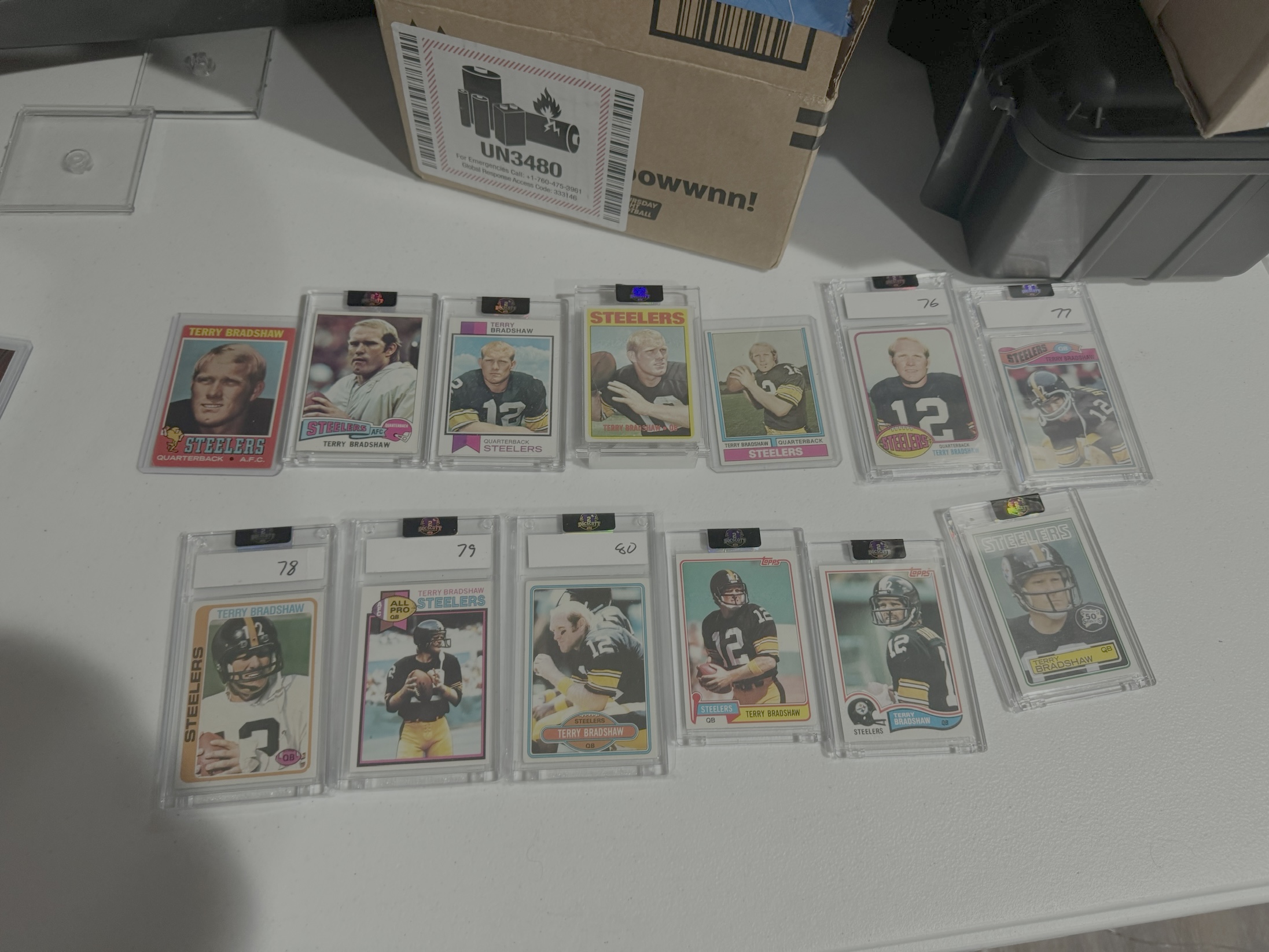 The full Bradshaw run before submission—lined up and ready for SGC grading.
Got a run you’re building or a story you want to share? Reach out to DocScott Sports Cards—Scott and the team are always happy to swap stories, offer advice, help plan your grading strategy, or just talk hobby memories. We’re here to help you build your collection one card at a time.